On September 27 I turned in an extended analysis
assignment for this class. My group analyzed plagiarism in the form of a
podcast. My classmates turned in written assignments. For this blog post we
were instructed to read and analyze one of our classmates’s extended analysis.
I chose Nidhi Kaith’s “Philosophy of Teaching Composition”.
Nidhi discusses in her extended analyses the idea that
truth is not something that can be taught but can be discovered. The imagery of
discovering is powerful and speaks to independence in the student that cannot
be achieved if the teacher is dictating what the student can learn. It also
creates the image of a partnership. The teacher is the student’s partner and
guide without controlling what the student learns but allowing them to learn
for themselves.
Nidhi goes on to detail her three core beliefs in the
teaching of writing, the first of which is “the power of reading”. She cites
Stephen Krashen’s “The Power of Reading” who claims that the real problem
Americans face in their literary failings “is not that Americans cannot read
and write, “…they just don’t read and write very well.” (ix).” Nidhi goes on to
explain Krashen’s assessment that “The reason why students cannot write well is
that they do not read” and links this lack of reading negatively impacts ones
cognitive ability, a sentiment that I agree with completely. She likens reading
to exercising the brain and explains that “Good readers are also at an
advantage as reading automatically strengthens their grammar, vocabulary, and
spelling.” As a result of an extensive vocabulary and proper grammar, the
student gains credibility, another fact that is proven true time and time again
when I visit supposedly reputable web sites and find grammatical and spelling
mistakes. Instantly I find myself doubting the authenticity of whatever piece
of new I am reading and well as that websites credibility as a whole.
The second core belief of her teaching philosophy Nidhi
discusses is “the power of language” by connecting the power of reading to its
effects on a student’s ability to write. She believes that “reading is by far
the best way of learning how language works, of how language doesn’t work, of
developing one’s command over the language, and of learning how to use language
in one’s writing to produce meaning.” It through reading, she says, that
perhaps she can induce the “itch of literature” which “nothing can cure…but the
scratching of a pen” as described by Samuel Lover. Through this itch she hopes
to combine literature and composition. An example she gives of accomplishing
this is by having her students read journalistic works and analyzing how
language works in different media platforms. This, she says, is a practice that
students not only need in order to be successful in this world but one the
value of which she hopes to impress upon her students so they can continue it
for years to come.
Of course, the power of language doesn’t stop with
reading critically composition. Nidhi knows that the act o writing is an
equally important aspect. She notes that students often see writing as a chore,
something that, because it seems like such a basic skill, when they don’t
succeed right away they become discouraged and come to resent writing. To
counter this she advocates the removal of grading as a way to judge a student’s
progress. This is a sentiment I support whole heartedly. This is the first year
I am actively grading students’ written responses and I don’t like it. We
assign students these grades and while we do provide commentary for the student
why they earned that grade there isn’t an opportunity for the student to learn
from their mistakes and resubmit the assignment. As Nidhi says, “Honest feedback
of the teacher should be the medium to learn how to write.” As I stated
in my earlier blog post “Learning to Write Well is a Process” the act of writing
is not something that has just one answer and takes practice, constant revision
but because students are handed these grades and not given the opportunity to
learn from their mistakes they quickly become discouraged. What’s more, it
actively stops them from exploring all they can do with writing. Nidhi says it
perfectly: “To force students to do a specific kind of writing with good grades
as their ultimate aim, defeats the purpose of writing.” This drive for good
grades completely misses the point of writing: to express oneself.
Nidhi’s third and last core belief is “the recognition of
the presence of multiculturalism in our classrooms.” I find this an interesting
concept to include as a core belief, especially her statement that “a good
teacher ought to recognize the presence
of a globalized classroom.” She goes on to explain this as the necessity
that a teacher recognize that each student is an individual with experiences
and cultural backgrounds unique to each of them. I like this idea, especially
when she connected it to her earlier argument that allowing students to express
themselves through their writing, thus giving them an outlet to showcase their unique
experiences and culture. She also makes the point that international students,
for whom English is a second or even third language, often need more help than
those for whom English is their first and sometimes only language. I couldn’t
agree more and I had firsthand experience with this last week when I
participated in the 1301 tutoring session on Thursday. As usual, we were
instructed to only spend roughly 15-20 minutes with each student so that every
student would have a chance to work with a tutor however, the first two
students I helped were non-native English speakers (one of them had only
learned English last year! I was thoroughly impressed). Because of their lack
of familiarity with English (not to say they weren’t fluent, only they didn’t
have the many, many years of practice of the other students) I spend more than
just 20 minutes working with them so make sure they understood the assignment.
Nidhi proposes having students work in small groups
comprised of both international and American students as a way to give
international students a way to learn from their peers who have been speaking English
all their lives. While I agree with her that “students feel more comfortable
learning new things around their peers” there is still the small problem that
American students are learning the subject too and as a result might not be the
best sources for international students who are learning how to write. The same
could be and has been said about peer reviews. Of course, the interactions
between American and international students in these small groups provides the
opportunity for the two sets to learn from each other in other ways. Douglas
McGray argues for the inclusion of multiculturalism in the American school
system in his article “Lost in America”. Nihdi’s suggested multicultural small
groups provides a means for students to learn about a foreign culture from
their peers, promoting empathy for those who live and experience the world in
such a different way than their own. Perhaps an assignment the small groups can
be set is the writing of a paper about the different cultures present in that
group.
Throughout her “Philosophy of Teaching Composition” Nidhi
clearly outlines her core beliefs and provides explanations why she gives them
so much importance. She also provides examples of how she would incorporate
these values into her lessons. I believe her suggest regarding the grading
system has more merit than what we can see. The same can be said for multicultural
small groups though I, personally, would caution from using those small groups
as a way to teach too often. Overall, I really like Nidhi’s philosophy in the
teaching of composition.
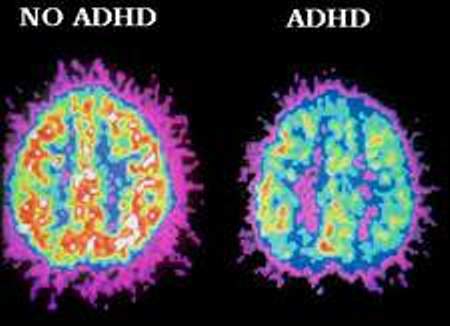 ADHD is caused in large part by the brain’s inability to
process and produce certain chemical reactions which is why it is called a disorder, because something isn’t quite
working right. Scans have shown that there is actually a physical difference between a normal and an ADHD-positive brain but because it is over diagnosed in children and associated with behaviors that are markers of childhood it is not taken seriously as a mental disorder. More times than I can count I have had classmates claim they know they are ADHD simply because they are feeling especially hyper that day. They use something that I have to struggle with every day as an excuse for their disruptive behavior. They laugh and they joke andnothing makes me angrier. But it
is the social perception. ADHD is a joke simply because “everyone has it”. It’s
somehow become the universal disorder and that needs to stop.
ADHD is caused in large part by the brain’s inability to
process and produce certain chemical reactions which is why it is called a disorder, because something isn’t quite
working right. Scans have shown that there is actually a physical difference between a normal and an ADHD-positive brain but because it is over diagnosed in children and associated with behaviors that are markers of childhood it is not taken seriously as a mental disorder. More times than I can count I have had classmates claim they know they are ADHD simply because they are feeling especially hyper that day. They use something that I have to struggle with every day as an excuse for their disruptive behavior. They laugh and they joke andnothing makes me angrier. But it
is the social perception. ADHD is a joke simply because “everyone has it”. It’s
somehow become the universal disorder and that needs to stop. I do not believe a child should be screened for ADHD before
middle school at the earliest. Instead,
I do not believe a child should be screened for ADHD before
middle school at the earliest. Instead, 