Sunday, December 6, 2015

I Was Supposed to Learn? (jk, jk)

Something I learned from this class? I supposed to…learn something?

Joking, joking.

I really did learn a lot in this class but I think what I learned that will be the most useful in my future career is andragogy.

Andragogy is the method and practice of teaching adults. I think I have made it very, very clear in previous blog posts that I have no interest in teaching. However, andragogy can easily be applied to my future dream career. I want and am going to work in a publishing house, collaborating with authors editing their novels and working with them to help them make their writing the best it can be. I am going to work in a publishing house. It is not something up for debate, it will happen. As soon as I graduate.

If you want to read my previous blog post on andragogy and how it will apply to my future career, here is the link: http://colleenlizz.blogspot.com/2015/09/oh-so-thats-definition-of-andragogy.html

Sunday, November 22, 2015

So This is What I'm Trying to Write About

We didn’t have a specific blog prompt for this week but rather, “Write what you want to write about, just write.” Well okay then. Y’all are about to be treated to quite a bit of rambling as I work through what I want the article-length (roughly at least 5,000 words) essay draft I have to turn in by midnight tonight to say.

 I wrote last week how I want to focus on audience awareness or, more accurately, the lack of it in the composition of grade school English/Language Arts curriculum. I found an article by Patricia McAlexander that discusses four subskills of audience awareness and the concept of “egocentric writing.” I can connect this to a quote from another of my sources (“It seems to be a part of human nature for us to think that everyone has had experiences similar to ours and that they share our perspective on things.”) by Donald Gallo. Of course, this isn’t true and Gallo goes on to make some wonderful points in ALL CAPS about how classic literature wasn’t written for teenage students to be dissected and analyzed and tested on but rather for educated adults who read the books because they were fun to read—points that I hope to then connect to Ede & Lunsford’s assertion that “it is only through the text, through language, that writers embody or give life to their conception of the reader.” (167). A conception that does not match the teenagers now trudging through page after page of beautifully written but completely uninteresting text to which they just cannot relate.

Carol Berkenkotter conducted a study entitled “Understanding a Writer’s Awareness of Audience” in which she focused on the “intellectual processes that writers engage in to attain what we commonly call “audience awareness.” What I got from her study was the audience awareness of the different writers she included in her study had a significant impact on how they approached the given prompt. Similarly, “classic” authors were heavily affected by their audience. Charles Dickens (3 of whose books I begrudgingly read in high school), for example, was not only paid by the word (the result of which was two whole pages describing a man walk up a single flight of steps) but was published in serials, a new chapter each week which was fine for his intended audience but does not, in any way, match up with what contemporary teenagers want out of a novel.

Contemporary students have grown up in the most technologically stimulating period of our world’s history. They have information at their fingertips that would have taken their parents a week of waiting for the book to be shipped to their local library to get. “Whatever the type of reading, almost all kids will be more attracted to a book that grabs their attention immediately—which right away leaves out most literature.” (Gallo, 35).

 I also want to include this deliciously accurate description: “Many teachers have come to acknowledge that the reality of teaching the classics is similar to the reality of trying to teach a pig to sing: It does not work and annoys the pig.” (Gibbons, Dail, & Stallworth, 53). I’m not sure where it will go but it is too vivid an image to ignore. Gibbons et al. go on to discuss the value of Young Adult Literature (which is personally one my favorite genres) in the classroom. Not only can YAL be just as literarily sophisticated and meritorious as classic novels, it has the added bonus of being something students actually want to read. When reading YAL, gone is the annoyed pig and instead is a student who actually takes pleasure in the act of reading.

 Going back to that thing I said about technology, I also found articles that discusses the incorporation of new technological literacies in the English curriculum. Curwood & Cowell conducted a study in which they incorporated various media technologies into a poetry curriculum, perfecting the curriculum over the course of three years and analyzing the importance of such incorporation and the effect it had on their students. Docket, Haug & Lewis in which they developed a curriculum that “focuses primarily on media analysis and documentary film production in an English/history block that meets state and district standards for both subjects and reflects a commitment to providing students with opportunities for complex intellectual engagement.” (418). I’m going to somehow connect these two studies to the fact that, although we’ve had this technology for a while, incorporating various media platforms into the curriculum is still a rare occurrence which just doesn’t make any sense. Students today are so much more technologically savvy than curriculum developers seem prepared to admit and yet “young people’s literacy skills are not keeping pace with societal demands of living in an information age that changes rapidly and shows no sign of slowing.” (Alvermann, 189). What’s more, with the current education model, the point of academics is to provide students with the opportunity to become productive members of society and get jobs (Robinson, Changing Education Paradigms). Jobs in which they are guaranteed to utilize ever-developing technology so why doesn’t the scholastic curriculum mirror this? Makes no sense to me.

Instead, education authorities are like the stereotypical principle I mentioned last week from Girl Meets World, completely egocentric and thoroughly convinced his way is the only right way. These people have forgotten what it was like to be a teenager. What’s worse, they’ve become so focused on making sure that students learn what they think is valuable they’ve completely forgotten one of the most important things that a student can become: a lifelong reader. Instead, teachers “have done what is expected of them (pass along a cultural/literary heritage), and making young people lifelong readers is not part of the plan.” (Bushman, 6). It’s a travesty. It is a travesty that results in declining literacy levels and America falling behind.

 All of this I will then somehow connect back to the necessity of increased audience awareness on the part of education curriculum and policy makers, and not just awareness of how students react to the literature they are presented but also how they take what they’ve learned and apply it to other areas of their lives. I’m going to try to incorporate the four subskills of audience awareness discussed by McAlexander and how policy makers should follow her advice on how to increase their audience awareness. There’s also the idea that “classic” novels don’t have these subskills in relation to contemporary teens.

 I also want to include somewhere in there the questions, “What are the goals of English as a core subject?” and “Why can these goals only be achieved by studying the classics?” I’m still figuring that out though.


Sources
“Ideas in Practice: Audience Awareness and Developmental Composition” by Patricia McAlexander
“How Classics Create an Aliterate Society” by Donald R. Gallo
“Audience Addressed/audience Invoked: The Role of Audience in Composition Theory and Pedagogy” by Lisa Ede & Andrea Lunsford
“Understanding a Writer's Awareness of Audience” by Carol Berkenkotter
“Young Adult Literature in the English Curriculum Today: Classroom Teachers Speak Out” by Louel C. Gibbons, Jennifer S. Dail, & B. Joyce Stallworth
“iPoetry: Creating Space for New Literacies in the English Curriculum” by Jen Scott Curwood & Lora Lee H. Cowell
“Redefining Rigor: Critical Engagement, Digital Media, and the New English/Language Arts” by Jessica Dockter, Delainia Haug & Cynthia Lewis
“Effective Literacy Instruction for Adolescents” by Donna E. Alvermann
“Changing Education Paradigms.” By Sir Ken Robinson
“Young Adult Literature in the Classroom—Or Is It?” by John H. Bushman

Tuesday, November 17, 2015

My Thesis? Um...

I honestly have no idea what my thesis for the article-length essay due at midnight this Sunday will be. I’m struggling to formulate a thesis that incorporates audience awareness and how literature classes at the high school and middle school levels do not have audience awareness. How am I supposed to write that? How am I supposed to support that? This is going to be a nightmare.

I was recently sucked into the black hole that is Girl Meets World, a Disney Channel sequel to the ever-popular Boy Meets World. GMW focuses on the adventures and coming of age story of Corey and Topanga’s (the stars of Boy Meets World) middle school aged daughter Riley Matthews. It’s a little silly, a lot of fun, and deals with many of the issues young teens face but the episode that really caught my attention was “Girl Meets the New Teacher.” This episode focuses on the conflict between Riley’s new English teacher and the school’s principal. The new English teacher, named Harper Lee (I’m sure you can guess the literary reference), wants to use comic books as part of her syllabus, specifically The Dark Knight, and the principal is having none of it. (Spoiler Alert) In the end Harper wins the debate when she proves that The Dark Knight has valid life lessons that can be applied to everyday life—and that connect to To Kill a Mockingbird, the book the principal wanted her to teach in the first place.

 In this example, the teacher understood her audience. When told to read a comic book everyone in the class, even Maya, Riley’s academically lazy and uninterested best friend, jumps to complete the assignment. Of course, this is a fictional scenario invented by script writers for a TV show that always has a happy ending—or is it? Audience Awareness is an important part of composition, of anything really. Knowing who your audience is and what they want is a crucial part of effectively reaching them so you can make your point or persuade them to do something. I mentioned in last week’s blog post that video game developers don’t know their audience. If I can somehow figure out what my thesis is I intend to include references to "UK Games: More Women Play Games Than Men, Report Finds" and "Video Games Need More Women - And Asking For That Won't End the World". Both of these articles discuss the disparity between what video game designers develop and what the majority of their customers actually want and how that is hurting them in the long run. I hope to somehow connect this to Ross Collin’s “How Rhetorical Theories of Genre Address Common Core Writing Standards” and Carol Berkenkotter’s “Understanding a Writer's Awareness of Audience.” 

I’m not sure if this is what Dr. Rice intended when he assigned us to “Compose an article-length essay with at least 10 sources on a composition teaching and/or research topic” but this is what I have and this is what interests me. The best teachers I had were the ones who could make the subject relatable and interesting which, in my English classes, was exceptionally hard to do, restricted as those teachers were by syllabi that permitted them to only teach the classics.

Sunday, November 8, 2015

Audience Awareness In My Dream Job

This week’s blog prompt asked that, with the learning objectives for this course in mind, what have I learned to is applicable to my future dream job. Well, it didn’t say “dream job” but I’m paraphrasing. 

My future dream job is to be an editor at one of the big four publishing houses in New York, City, or an assistant editor, or something in an editorial position. I’m not greedy, I just really want to help shape the future of literature. I want to see a more diverse selection of literary characters, especially in the science fiction and fantasy genre. With these dream goals in mind I think Audience Awareness is one of the most important things I’ve learned in the completion of this course.

 There is a serious debate going on in the video game community regarding equal representation and the over sexualization of female characters in video games. Game creators are coming under heavy fire for not having Audience Awareness in the fact that at least half of all game players are women and are feeling unsatisfied with female representation. Similarly, the science fiction and fantasy genres fail to be more inclusive in their representation of minority and disabled characters.

The number of minority character in the science fiction and fantasy genre is growing but it’s still not enough. The science fiction genre itself was created by a woman and most of its first contributors are women (ex: Mary Shelley). Even the first full-length novel is credited to a woman, Tale of Genji by Murasaki Shikibu, and yet female heroines are sorely lacking in numbers especially considering the power female fans have in making or breaking a book’s success. Just look at the Twilight Saga. I, personally, despise that series. It has so many interesting and unique elements and they were executed so poorly that my hands shake with rage at the mere thought and yet the saga’s popularity is undeniable. All because of its female fans. Go figure.

 Appealing to the female demographic was an imperative part of Twilight’s success. What’s more, the ratio of men to women in the world favors women so why doesn’t the science fiction and fantasy genre mirror this by publishing books that appeal to the demographic more likely to make books popular? Personally, it makes no sense to me. The only reason I even want to work in the publishing business, the only reason I even pursued a Bachelor’s in Creative Writing and then a Master’s, was because I had the good fortune of picking up a medieval fantasy book with a strong, female heroine I could identify with by Tamora Pierce in the sixth grade. I went on to consume every Tamora Pierce book I could find because, while her heroines dealt with epic struggles and had mighty battles against bad guys, they also dealt with the things every girl coming into her own deals with. They dealt with puberty, misogyny, racism, discovering their sexuality. That’s the kind or representation that is missing from the science fiction and fantasy genres in a broad scale.

As a fan of science fiction and fantasy I am connected to the community in a way that allows me to speak with and understand what they, as an audience and consumer, want to see more of and it is this Audience Awareness I want to bring to my future dream job.

Wednesday, October 28, 2015

We Over Diagnose ADHD and it Ticks Me Off

Attention Deficit Hyperactive Disorder, or ADHD, is marked by the inability to focus, tendency for constant motion, and impulsivity. Unfortunately, these are the same symptoms of another serious condition: childhood. In the video we watched last Friday during class the narrator noted how the increase of young children, especially elementary school age children, has increased in correlation with the number of standardized tests children are forced to take. Teachers, desperate for their students to attain high scores on these standardized tests, are forced to sequester their students inside classrooms where they sit at desks and learn in such a way that is completely stagnant.

Children are energetic creatures. They are in the earlier years of their physical and psychological development and as such their body produces more energy than that of the average adult already fully grown. As students, being kept inside a classroom all day with only an hour at maximum to run outside and play, children are unable to burn off the excess energy their body is naturally producing. As a result of all this pent up energy, children feel the constant need to move. They jiggle their feet, wiggle in their chairs, if an authority figure yells at them for constantly moving the movement become internal, flitting from one idea to the next, and teachers, having to be responsible for 30 of the small humanoids tell the parents that they should have their child checked for ADHD because what else are they supposed to do?

So, the parent takes the child to a psychiatrist for screening and more often than not they child tests positive for ADHD symptoms. I myself remember my own screening process when I was eleven years old. I was, thankfully, tested at an age where most of my classmates were beginning to settle down in the classroom. I, on the other hand, was not, so I was given little pills that really did help. However, with the growing popularity of diagnosing kids as having ADHD so has the number of kids diagnosed while still in elementary school. This is ridiculous. Children are by their very nature hyperactive and they don’t have the experience to reign in their impulsivity. They want to go out and do and see and explore because everything is new to them. Pumping these children full of pills is not helpful to them nor does it help the individuals who actually do have ADHD.

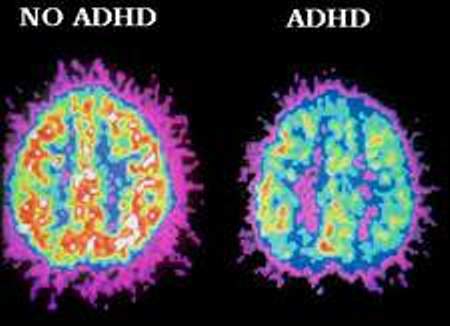
ADHD is caused in large part by the brain’s inability to process and produce certain chemical reactions which is why it is called a disorder, because something isn’t quite working right. Scans have shown that there is actually a physical difference between a normal and an ADHD-positive brain but because it is over diagnosed in children and associated with behaviors that are markers of childhood it is not taken seriously as a mental disorder. More times than I can count I have had classmates claim they know they are ADHD simply because they are feeling especially hyper that day. They use something that I have to struggle with every day as an excuse for their disruptive behavior. They laugh and they joke andnothing makes me angrier. But it is the social perception. ADHD is a joke simply because “everyone has it”. It’s somehow become the universal disorder and that needs to stop.


I do not believe a child should be screened for ADHD before middle school at the earliest. Instead,
the educational system should be reminded that children are bouncing balls of energy. Standings in the corporate world have been shown to do wonders for the productive power of adults, they can easily be incorporated in classrooms as a way to help children burn off excess energy. Desks that are basically stationary bicycles with flat tops on them have also been shown to be effective in promoting children’s ability to focus on the task at hand. I do not believe that medicating students into submission is the answer, rather better understanding and accommodation of children’s physiology is required.

Sunday, October 25, 2015

5 Terms

This week's prompt was to list five terms from our keyterms that we are not quite sure of. As I was scrolling through the document I noticed that, while I understood and could define some words,  could not do so when considering them from the viewpoint of composition and those words are the ones I have chosen to include in this list. Thank you in advance for your comments.
  1. Authority
  2. Empowerment
  3. Genre Theory
  4. Intertextuality
  5. Evaluation

Sunday, October 18, 2015

If I Had to Make a Syllabus in My Nightmares


Technology is the classroom is an incredibly hot topic. Should students have computers? How young is too young to allow students to have computers in the classroom? The first time I used a computer in the classroom I was in 5th grade. I don’t remember the assignment but I do remember the excitement of getting to use a laptop for the first time. The librarian rolled the big gray cart into the classroom and handed out big, clunky black laptops with little red dots at the center of the keyboard for a mouse. It was definitely one of the more exciting days of my elementary school career.

That was the starting point. From then on we used computers more and more frequently in the classroom until, finally, in college I was allowed to bring my computer with me to class every day for note taking and general use. The older I got the more my teachers and then professors incorporated technology into their lessons plans. One of the most noticeable examples of this was in high school when we started writing research papers or giving presentations that required PowerPoints. Similarly, in the nightmares where I find myself teaching I include such assignments that require the use of technology. Of course, in my nightmares I’m always teaching younger students just beginning to understand how technology can be applied to schoolwork when all they’ve ever known is the entertainment value of their parents’ iPad’s so my answer might not fulfill this week’s blog prompt—“What is one assignment you will include in your syllabus assignment that uses collaboration and/or technology and/or other things Yancey, Selfe, Breuch, Bruffee, or Shaughnessey have discussed”—but I’ll try.

Kids these days are growing up knowing technology, knowing how to use it and therefore don’t need to be taught the mechanics of it necessarily. What is necessary for students to understand early on is how the technology they love can apply to their academics. Book reports were once done with cardboard posters and cutouts. Now they can be done with PowerPoint presentations, videos or any number of such mediums. Such mediums can then be utilized as way to encourage students to be comfortable speaking in front of others, something I myself am very much not.

Allowing the students to choose their medium for such presentations is also a good way to teach them about what platforms work best for different presentations. PowerPoint is the obvious easy way out because it’s a tried and true favorite but I would try to impress on my students that a PowerPoint is much more than just putting up words and pictures on the screen which is something I think a lot of students don’t quite understand. A PowerPoint is not something you can just read off of because that makes for literally the most boing presentation in history. I should know, I spent all of sophomore year of high school being taught by a guy who that was all he did.

 As for using a video, if they were to do that I would ask them to act out what they think is the most important scene in their chosen book and then, after the class watched the video, have them stand up and explain their choice. This would allow them to work in groups because each student who helped another student with a video would get extra points on their own report thus encouraging teamwork as well as incorporating the use of technology into the classroom at an early age.

Sunday, October 11, 2015

I'm Adulting!

Something that has captured my interest these past few weeks. Well that could be a number of things too numerous to list. I guess if I had to pick just one it would be the image of defending the tower when we discussed the teaching of the English language.

When I think of a tower I always think Rapunzel trapped, hidden away from the word, the only human interaction she had being with the witch who would climb up her long golden hair. Imagine how that affected her as a person, how much that would have stunted her growth. Is that the kind of relationship we want English to have with the world?

I know it’s not part of our class’ assigned readings but in his article “Do You Speak American?” Robert MacNeil discusses the wide variety to be found in modern day American English and how the different cultures in this melting pot of a country have influenced that variety. This variety, he says, is not a bad thing. He directly addresses the misconceptions the public has regarding the varied pronunciations of the same words as well as explaining how misplaced the stigma is that accompany those pronunciations.  In doing this he is attempting to both broaden the reader’s understanding of the English language in America and change any negativity they might hold toward certain demographics that use English in a way that is different than them.

Another article that discusses the different dialects of American English is John Simon in his article “Why Good English is Good for You”. Now, anyone who has actually read this particular article understands that, while Simon’s argument is valid he says it in such a way that he comes across as a complete prick. He bemoans what he considers the improper use of the English language and antagonistically places blame directly upon those who teach English.

Both Simon and MacNeil are discussing the development of the English language but they come at the subject from two completely different points of view. MacNeil sees the growth of language as something that helps bring people closer together. He’s open minded and encouraging. Simon, on the other hand, is almost antagonistic. He belongs firmly with the garrison defending that tower in which Rapunzel was imprisoned.

This talk of defending the tower, I feel, is very limiting. Like Rapunzel held captive, a tower-like construct when dealing with English stunts the development of the language. Even Simon admits that language in and of itself is an ever-growing, ever-changing entity. To keep it locked up in a tower is…well, at the very least it is unproductive.

Monday, October 5, 2015

Nidhi's "Philosophy of Teaching Composition"

On September 27 I turned in an extended analysis assignment for this class. My group analyzed plagiarism in the form of a podcast. My classmates turned in written assignments. For this blog post we were instructed to read and analyze one of our classmates’s extended analysis. I chose Nidhi Kaith’s “Philosophy of Teaching Composition”.

Nidhi discusses in her extended analyses the idea that truth is not something that can be taught but can be discovered. The imagery of discovering is powerful and speaks to independence in the student that cannot be achieved if the teacher is dictating what the student can learn. It also creates the image of a partnership. The teacher is the student’s partner and guide without controlling what the student learns but allowing them to learn for themselves.

Nidhi goes on to detail her three core beliefs in the teaching of writing, the first of which is “the power of reading”. She cites Stephen Krashen’s “The Power of Reading” who claims that the real problem Americans face in their literary failings “is not that Americans cannot read and write, “…they just don’t read and write very well.” (ix).” Nidhi goes on to explain Krashen’s assessment that “The reason why students cannot write well is that they do not read” and links this lack of reading negatively impacts ones cognitive ability, a sentiment that I agree with completely. She likens reading to exercising the brain and explains that “Good readers are also at an advantage as reading automatically strengthens their grammar, vocabulary, and spelling.” As a result of an extensive vocabulary and proper grammar, the student gains credibility, another fact that is proven true time and time again when I visit supposedly reputable web sites and find grammatical and spelling mistakes. Instantly I find myself doubting the authenticity of whatever piece of new I am reading and well as that websites credibility as a whole.

The second core belief of her teaching philosophy Nidhi discusses is “the power of language” by connecting the power of reading to its effects on a student’s ability to write. She believes that “reading is by far the best way of learning how language works, of how language doesn’t work, of developing one’s command over the language, and of learning how to use language in one’s writing to produce meaning.” It through reading, she says, that perhaps she can induce the “itch of literature” which “nothing can cure…but the scratching of a pen” as described by Samuel Lover. Through this itch she hopes to combine literature and composition. An example she gives of accomplishing this is by having her students read journalistic works and analyzing how language works in different media platforms. This, she says, is a practice that students not only need in order to be successful in this world but one the value of which she hopes to impress upon her students so they can continue it for years to come.

Of course, the power of language doesn’t stop with reading critically composition. Nidhi knows that the act o writing is an equally important aspect. She notes that students often see writing as a chore, something that, because it seems like such a basic skill, when they don’t succeed right away they become discouraged and come to resent writing. To counter this she advocates the removal of grading as a way to judge a student’s progress. This is a sentiment I support whole heartedly. This is the first year I am actively grading students’ written responses and I don’t like it. We assign students these grades and while we do provide commentary for the student why they earned that grade there isn’t an opportunity for the student to learn from their mistakes and resubmit the assignment. As Nidhi says, “Honest feedback of the teacher should be the medium to learn how to write.” As I stated in my earlier blog post “Learning to Write Well is a Process” the act of writing is not something that has just one answer and takes practice, constant revision but because students are handed these grades and not given the opportunity to learn from their mistakes they quickly become discouraged. What’s more, it actively stops them from exploring all they can do with writing. Nidhi says it perfectly: “To force students to do a specific kind of writing with good grades as their ultimate aim, defeats the purpose of writing.” This drive for good grades completely misses the point of writing: to express oneself.

Nidhi’s third and last core belief is “the recognition of the presence of multiculturalism in our classrooms.” I find this an interesting concept to include as a core belief, especially her statement that “a good teacher ought to recognize the presence of a globalized classroom.” She goes on to explain this as the necessity that a teacher recognize that each student is an individual with experiences and cultural backgrounds unique to each of them. I like this idea, especially when she connected it to her earlier argument that allowing students to express themselves through their writing, thus giving them an outlet to showcase their unique experiences and culture. She also makes the point that international students, for whom English is a second or even third language, often need more help than those for whom English is their first and sometimes only language. I couldn’t agree more and I had firsthand experience with this last week when I participated in the 1301 tutoring session on Thursday. As usual, we were instructed to only spend roughly 15-20 minutes with each student so that every student would have a chance to work with a tutor however, the first two students I helped were non-native English speakers (one of them had only learned English last year! I was thoroughly impressed). Because of their lack of familiarity with English (not to say they weren’t fluent, only they didn’t have the many, many years of practice of the other students) I spend more than just 20 minutes working with them so make sure they understood the assignment.

Nidhi proposes having students work in small groups comprised of both international and American students as a way to give international students a way to learn from their peers who have been speaking English all their lives. While I agree with her that “students feel more comfortable learning new things around their peers” there is still the small problem that American students are learning the subject too and as a result might not be the best sources for international students who are learning how to write. The same could be and has been said about peer reviews. Of course, the interactions between American and international students in these small groups provides the opportunity for the two sets to learn from each other in other ways. Douglas McGray argues for the inclusion of multiculturalism in the American school system in his article “Lost in America”. Nihdi’s suggested multicultural small groups provides a means for students to learn about a foreign culture from their peers, promoting empathy for those who live and experience the world in such a different way than their own. Perhaps an assignment the small groups can be set is the writing of a paper about the different cultures present in that group.

Throughout her “Philosophy of Teaching Composition” Nidhi clearly outlines her core beliefs and provides explanations why she gives them so much importance. She also provides examples of how she would incorporate these values into her lessons. I believe her suggest regarding the grading system has more merit than what we can see. The same can be said for multicultural small groups though I, personally, would caution from using those small groups as a way to teach too often. Overall, I really like Nidhi’s philosophy in the teaching of composition.


Sunday, September 27, 2015

Oh So That's the Definition of Andragogy

When I first read this week’s blog prompt my first reaction was “huh?” To be quite honest, I had no idea what “andragogy” meant. Thankfully, Google came to the rescue and gave the definition for andragogy as, “the method and practice of teaching adult learners; adult education.”

With that definition in mind I considered the prompt: “What is andragogy, and how might the approach help in teaching FYC?” As I’m sure I’ve made it clear in previous blog posts, my life goal is to be an editor in a big publishing house, not a teacher (I’ve even talked to Dr. Lang about working in the Writing Center in order to get some experience rather than teaching next year). If I am ever to fulfill this dream I must become familiar with andragogy because as an editor I will mostly be dealing with adult writers and helping them with their manuscripts. In the context of this prompt I guess it can be appropriate to describe my potential clients as adult students and it with this mindset that I move forward with my response.

I believe that a big part of interacting with adult students is respect. Nothing pisses off adults more than patronization (the same could be said for teenagers but usually they don’t have the life experiences to back their anger up even though they think they do). Adults have gone through life, had different experiences and it is important for teachers of adult students to remember and respect that.

There is a concept in composition called contacts zones, described by Pratt as “social spaces where cultures meet, clash, and grapple with each other, often in contexts of highly asymmetrical relations of power" (462). As an editor I will be working in nothing but contact zones. I will be working with adults with widely varying backgrounds, levels of experience, and competency.

Not only have adult students experienced things no regular student has but they have also been defined by those experiences. Younger students who have yet to experience all that life has to offer can still be molded. They are much more likely to accept the teacher’s word as law. Adult students will not do that. They have their own opinions, their own ideas. Disregarding and disrespecting their ideas and opinions can only lead to disaster. To be successful in this minefield is to never forget that another human’s experiences are just as valid as my own.

Empathy is defined, again by Google, as “the ability to understand and share the feelings of another” not to be confused with sympathy which can be negative as it involves pity which has the connotation of looking down on someone. In my own educational experiences I have found that I am most eager to learn from those professors that not only truly enjoy their subject but also seem to truly empathizing with their students. Empathy promotes understanding which in turn promotes cooperation. It is the cooperation between students and teachers that truly helps in education, especially in teaching adult students. Only armed with empathy can anyone in a pedagogic position at any level be truly effective.

Sunday, September 20, 2015

When I Teach Composition in My Nightmares

Our blog prompt for this week was to detail our philosophy of composition in accordance with our teaching philosophy. Seeing as I have never considered what my teaching philosophy might be because teaching is not in my life plan in any way, shape or form, this particular prompt was difficult.

In class we were asked to condense our teaching philosophy into one sentence, which I did, and I’m not sure if it works, but this is what I came up with: My teaching philosophy focuses on getting students comfortable with writing by helping the student find their voice in their writing by allowing them to learn through trial and error and exploring how to apply different writing techniques to their own work.

I’ve noticed in my grading that most students aren’t comfortable with their writing. As a result, they hate having to write at all. They consider it a chore which is a shame. They don’t understand that writing can be fun and I feel that a big reason for that is they weren’t encouraged when they were younger to write whatever they want. Too often they were constricted in their younger years in their writing assignments. With that constriction came resentment. Students resent being told what to do, it’s a cornerstone of teenagerdom.

As I’ve written in previous blog posts, allowing students to express themselves in their writing is an important component of their education. I also believe writing and learning to write well is an on-going process that requires extensive, repetitive practice. I also believe that incorporating subjects the students are actually interested in will really help engage students in class discussion and encourage them to be enthusiastic about the material. Of course, sometimes you won’t be able to make material interesting and relevant to a student all the time. Sometimes you will have to tell students that the reason material is relevant to them is because they are citizens of the planet earth and it is their responsibilities as citizens to know this information.

If I were to ever somehow get suckered into teaching I would really like to focus on encouraging students to find their own voices in their writing. I would do this by assigning them work that allows them to practice their writing in creative ways that they choose. The students could then dissect their creative writing to understand the rhetorical devices they chose in order to reach their audience. I would also try to include pieces to analyze that are relevant to their interests, more contemporary pieces like Harry Potter or other works not written by old dead white guys.

I would also want to meet with students one on one over the course of the semester to discuss with them what they think their personal learning style is. I would ask the students if I need to include power points, handouts, perhaps even audio recordings of class discussions. Not every student learns the same way and it is important for teachers to reach as many students as possible throughout their careers. 

Sunday, September 13, 2015

My...Teaching Philosophy and Potential Assignments?

When we were given this prompt, to write about what assignments we would give students using our teaching philosophy, well, I don’t want to be a teacher, have absolutely no interest in being a teacher, and as a result have no teaching philosophy. I wasn’t even sure what a teaching philosophy is until I did the reading for this week, to be quite honest. From what I can gather, a teaching philosophy is what you as a writer value and what you want to impart on your potential students. Well, I thought, I could work with this.

After I have completed my education my ultimate goal is to become an editor for a publishing house. With this in mind I reexamined the prompt for this week. As an editor what will I be looking for in the submissions that come across my desk? Working with this expectation, what will I want authors to have the most experience with? Thinking from this perspective, the answer came quite easily: interesting, creative content and a strong clear voice.

Keeping in line with those expectations, I feel that the assignments that would best help young writers meet those expectations are assignments that help them find their voice in the context of creating writing. Give students the ability to write whatever they want so that they can experiment and discover what works for them. Journaling exercises would help with this. Possibly have students read letters and then write responses to those letters; or perhaps one sentence prompts and let the students figure out what story that prompt seeds; or have students read stories and then talk about the different methods the authors use and discuss how they can apply those some methods to their own writings.

I feel that allowing students to find their own voice in their writings, especially in their creative writings, is an incredibly important part of the writing process. When I was in grade school all I ever wrote were research based papers which were good exercises to be sure but because there really had no creative outlet in my academics I turned instead to what is called fan fiction in which I took already established characters from published works and manipulated them using my own plots or settings. I would then take these pieces post them online where I would receive feedback from other writers on the websites but it wasn’t the same as getting feedback from those with the experience and education to help young writers learn and grow.

It wasn’t until I entered college and began taking creative writing courses that I began to receive the kind feedback that really helped my creative writing. Sure, the more academic writing helped with my overall style but I had to work hard to develop my voice in my fan fiction and then my college professor helped me refine it.

The using of spare time to hone writings skills is not something that every student does. If I were ever to be a teacher—and keep in mind if this were to happen I would try to be an elementary school teacher—I would really like to focus on allowing my students to explore their own imaginations through the medium of writing and I would give them assignments that reflect that focus.

Sunday, September 6, 2015

Learning to Write Well is a Process

The ability to teach someone how to write is a unique talent, one that I, personally, do not posses which works great for me as being a teacher is not even something that is on my prospective jobs radar. However, if I were to speculate on what is hardest to teach a new writer, I would have to say that it is most difficult to teach new writers that practice is necessary, even crucial, to become a better writer.

 I spent most of Thursday grading the first round of Brief Assignments for ENGL1301 and the most frequent commentary students had about writing was that they hated it because they weren’t any good at it. I rolled my eyes more times than I could count because writing well is not something that one can do overnight. Looking back at my own first attempts at writing creatively I can tell you in no uncertain terms that I was awful. Thankfully, I kept trying. I submitted my work to online archives and got helpful feedback and suggestions and I tried again. With every story, every word typed into a Microsoft Word document or written in slanting cursive I got a little better and a little better and I’m still getting better.

 I am going to go ahead and sound like an old man waving his cane and grouching about young whippersnappers in my front lawn but this generation is the generation of instant gratification. Patience and perseverance are almost nonexistent qualities in the youngsters of today. With the advent of the internet and its plethora of online databases that take less than fifteen minutes to search this generation has become accustomed to getting results fast. What’s more, there are things we call “Life Hacks” which make life even easier than it already is. All of this it getting to the point where it’s more than a little ridiculous.

 Working hard is becoming a foreign concept to most young people and I am no exception. I am an incredibly lazy person and instant gratification is my bread and butter so I have to work to overcome that mindset in order to improve in my chosen field of creative writing. I constantly have to remind myself that instant result are not the goal, that most of what I am doing is part of a process, a long, never ending process.

 Students need to be encouraged, whether they see themselves as good writers or not, to just write. I feel that it’s important to tell students that it doesn’t really matter what they’re writing so long as they are writing. They need the practice. They need to figure out what their style is. And they need to get feedback from other writers so they can keep learning and improving. Writing takes work, long hours of hard work but the rewards are infinite and that is something that is difficult to teach in this day and age.

Sunday, August 30, 2015

So Rhetoric is a Thing

On Friday August 28th I received a blog prompt in my History and Theories of College Composition class asking the question “What is rhetoric? What is the history and theory of rhetoric? What do you want to do with the content from this course?” And, to be quite honest, I don’t have the smallest of clues.

Dictionary.com defines rhetoric as “the art or science of all specialized literary uses of language in prose or verse, including the figures of speech.” From this definition we can deduce that rhetoric is how we talk, write, and present our ideas using words. It’s also how we tailor those presentations to our audience. Have you ever noticed the differences between how you speak to or text your friends and how you address your parents. I know I have. When I’m with my friends my speech patterns are relaxed, less formal. I don’t put as much effort into getting the words out in the right order because I know my friends, with whom I spend a great deal of my time and who are of the same age as me, will understand what I am trying to say. When I’m with my parents I know they will comment if I don’t use proper grammar, if I don’t enunciate clearly, if I accidentally use a curse word, so I adjust my language accordingly. This is rhetoric, the art of choosing the most effective language with an eye to the context of the situation.

This art of choosing known as rhetoric as a long history dating back thousands of years. The Ancient Egyptians prized it, Mesopotamia started it, the Chinese philosopher Confucius used it, and the philosophers of Ancient Greece made it famous. Now, thousands of years later students are still studying rhetoric. Theories abound about how best to implement rhetoric strategies. As a student myself I am taking Texas Tech’s History and Theory of College Composition in the course of studying for my M.A. in English with a focus on Creative Writing. As the name would suggest, in the class we will be studying the history of rhetoric and what theories were implemented in the past and which ones are used in the present and I for one am incredibly curious.

As I said, my focus is on Creative Writing and as such I am really interested in how rhetoric theories affect the way my characters interact with each other. What rhetoric strategies would me characters employ when addressing a superior, a friend, a man they are trying to talk down off a ledge? Does social class and upbringing have an effect on what rhetoric strategies characters are familiar with? How would a character react if another accidently uses the wrong rhetoric strategy when communicating with them? What are the different rhetoric strategies are and when are they appropriate? All of these questions and more I hope to find answers to as I embark on the adventure that is this class.